Friday, June 30, 2017

Wednesday, September 28, 2016
Permaculture Course in December in Egypt .
Permaculture practitioner Geoff Lawton has shown on a 10 acre site near Jordan how to green the desert with food. Want to be part of another project greening the desert in nearby South Sinai desert this December? Tap in to a real world adventure of vital importance!

#permaculture course #Nuweiba#habibacommunity
Join us at the very special Habiba Organic Farm, Nuweiba for a 10 day Permaculture Design Certificate course with a dynamic team from Western Australia:
What is Permaculture ?
Genius originator of the
Permaculture concept, Bill Mollison, said “it is about designing sustainable
human settlements. It is a philosophy and an approach to land use which weaves
together microclimate, annual and perennial plants, animals , soils , water
management and human needs into intricately connect productive communities.”
Your teachers will be from Western Australia. The wonderful Mr Olly Watkins ( drummer, exuberant facilitator, primary school teacher , permaculture consultant who makes learning fun ); Mrs Nada Watkins ( electrical engineer with a passion for waste reduction at source and renewable energy systems); and Ms Bee Winfield (owner operator Merri Bee Organic farm for 30 years, permaculture teacher, soil life coach and author of “Nourishing soil – a growers guide to regenerating fertile soil”) . Olly, Nada and Bee will incorporate hands-on exercises to make a fun and interactive course that will leave
you with the basic skills you need to design and set up our own permaculture
system.
This intensive course will cover:
- The principles and ethics of
permaculture
- Using zones, sectors, and
elevational planning to save energy and resources
- Techniques to harvest and hold
water in the arid landscape ( soil regeneration, wicking beds, swales, covered water impoundments
and grey water systems)
- Weeds and herbs (their uses in
the nutrient cycle)
- Integrating a diversity of
animals such as poultry, rabbits and goats into your growing systems.
- Nutrient cycling with hot composting and worm farming, multi species cover crops and pasture cropping with perrenials.
- Designing low- energy -use
human settlements in the desert
- zones 1 and 2 : Influencing
microclimate around the house and veggie garden in arid lands
- Orchards and woodlots from seed
collection through to propagation and establishment
Course Times
The course runs from 9 a.m. – 4 p.m.
each day .
Fantastic accommodation and 3 meals a day is all included in the ridiculous early bird price of a mere $600.00 Get in quick!

Secure your spot on this exciting adventure in the birthplace of civilization by visiting http://www.habibaorganicfarm.com/contact
Permaculture Course in December in Egypt .
Permaculture has a lot to offer in Earth repair and care of people.
Join us at the very special Habiba Organic Farm, Nuweiba for a
10 day Introduction to Permaculture course with a dynamic
team from Western Australia: the wonderful Mr Olly Watkins ( drummer, exuberant facilitator, primary school teacher , permaculture consultant who makes learning fun ); Mrs Nada Watkins ( electrical engineer with a passion for waste reduction at source and renewable energy systems); and Ms Bee
Winfield (owner operator Merri Bee Organic farm for 30 years, permaculture teacher, soil life coach and author of “Nourishing soil – a growers guide to regenerating fertile
soil”)
What is Permaculture ?
Genius originator of the
Permaculture concept, Bill Mollison, said “it is about designing sustainable
human settlements. It is a philosophy and an approach to land use which weaves
together microclimate, annual and perennial plants, animals , soils , water
management and human needs into intricately connect productive communities.”
Olly, Nada and Bee will incorporate hands-on exercises to make a fun and interactive course that will leave
you with the basic skills you need to design and set up our own permaculture
system.
This intensive course will cover:
- The principles and ethics of
permaculture
- Using zones, sectors, and
elevational planning to save energy and resources
- Techniques to harvest and hold
water in the arid landscape ( soil regeneration, wicking beds, swales, covered water impoundments
and grey water systems)
- Weeds and herbs (their uses in
the nutrient cycle)
- Integrating a diversity of
animals such as poultry, rabbits and goats into your growing systems.
- Nutrient cycling with hot composting and worm farming, multi species cover crops and pasture cropping with perrenials.
- Designing low- energy -use
human settlements in the desert
- zones 1 and 2 : Influencing
microclimate around the house and veggie garden in arid lands
- Orchards and woodlots from seed
collection through to propagation and establishment
Course Times
The course runs from 9 a.m. – 4 p.m.
each day .
Accommodation and 3 meals a day is all included in the early bird price of a mere $600.00 Get in quick!
Secure your spot on this exciting adventure in the birthplace of civilization by visiting http://www.habibaorganicfarm.com/contact
Friday, March 18, 2016
 LOG GROWN SHIITAKE WORKSHOP

Have you
ever wanted to grow your own shiitake mushrooms?
Shiitake
are high in proteins, vitamins and minerals and low in fat. They are used
around the world to help improve the immune system, improve circulation and
reduce cholesterol. There is evidence that shiitake may help in inhibiting the
growth of cancer tumours.
Growing
shiitake on logs is the traditional method of production. Research carried out
in Australia in recent years suggests that the log grown method produces
superior fresh shiitake.
Shiitake
are traditionally grown on oak logs. The word ‘shiitake’ literally means
‘oak-mushroom’. Australian research has proven that shiitake can be
successfully grown on many types of eucalypt
Come along
to this workshop to learn the method of inoculating logs and growing these
versatile mushrooms for nutrition, fun or even commercial use.
Date: Sunday May 1st
Time: GAther at 9 for a 9.30 am start. Goes till 1 pm.
Cost: $45.00 includes morning tea
Teacher: Mr Julian Sharp
Julian is a great native forest defender, having gone to court recently to successfully stop bauxite mining exploration in our beautiful Karri forests. He brings his expertise in growing shiitake from both Victoria and Pemberton, and sees this workshop as a great opportunity to get a cooperative style log grown shiitake industry happening in the south west, for people to get involved in at whatever scale or level they wish. Julian will supply a
range of suitable farm grown eucalypts for host logs, shiitake plug spawn,
beeswax......and inform us on log grown shiitake research
history, growing methods and conditions, marketing etc.
Venue: Merri Bee Organic Farmacy
Contact for enquires
and to book (before April 22nd please) to
beewinfield@westnet.com 08 97561408 after dark
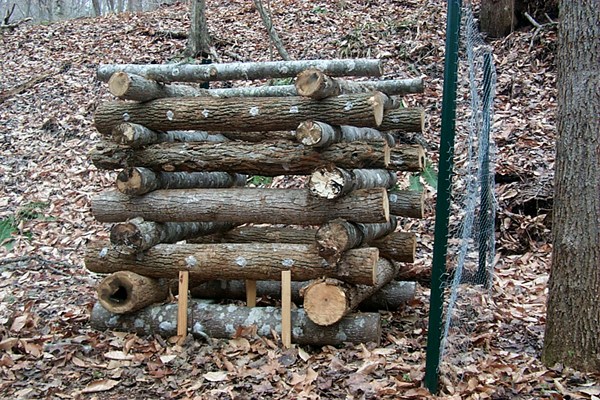
Have you ever wanted to grow your own shiitake
mushrooms?
Shiitake are high in proteins, vitamins and
minerals and low in fat. They are used around the world to help improve the
immune system, improve circulation and reduce cholesterol. There is evidence
that shiitake may help in inhibiting the growth of cancer tumours.
Growing shiitake on logs is the traditional method
of production. Research carried out in Australia in recent years suggests that
the log grown method produces superior fresh shiitake.
Shiitake are traditionally grown on oak logs. The
word ‘shiitake’ literally means ‘oak-mushroom’. Australian research has proven
that shiitake can be successfully grown on many types of eucalypt
Come along to this workshop to learn the method of
inoculating logs and growing these versatile mushrooms for nutrition, fun or
even commercial use.
Date: Sunday April 30th Time:
9.30 am till 1 pm. Cost: $45.00
Venue: Merri Bee Organic Farmacy
Contact for enquires or booking beewinfield@westnet.com
Thursday, February 4, 2016
I was kicked out of home at 16 for building
compost heaps in our backyard in the Melbourne suburb of Mt Waverley. Earlier,
Dad had taken me to a psychiatrist in an attempt to rid me of what he thought
was a rare personality disorder, but the composting obsession proved incurable.
Now I’m 57, and a steaming hot compost
heap still enthralls me: the way it takes stinky waste products and turns them
into black gold ( humus). I love that a mass of red wriggler worms
can demolish a cow pat in half a day and that a throng of soldier fly larvae
can devour a sheep’s hide and guts just
48 hours, and be themselves returned to the soil (via some chooks )soon after.
And that out of all this decay comes another generation of healthy plants, and another joy of my
life, food! I wanted to be an
organic farmer from the age of 10.
I arrived in Nannup as a very young, mung bean- eating hippie in the early 80’s
and after a foray in a commune which
promised cheap land upon which to follow
my dream ( but delivered lots of hassles) , me and my first husband moved on to 27 acres in Nannup,
inspired by Bill Mollison to start a Permaculture. I am still here, having raised a family of 5
children. That, and working for a living
, meant Permaculture was on the back burner for many years. Near the end of
that 17 year marriage I constructed
a passive solar mudbrick house out of recycled materials. The house
is still standing and the permaculture
surrounding it has grown upwards and outwards: magnificent now with
towering bamboos and pine nut trees, spreading oaks, chestnuts and hundreds of
other species of fruit, nut , timber and native
plant. I met my darling Stewart 12 years ago and we
suddenly became full time organic farmers, ditching our outside jobs
pronto, thanks to the rise and
rise of farmers markets. Our Permaculture yields
building materials , all our food and an income year ‘round.
We would be living the dream by now, but no man is
an island and climate change hit us in about 2007. Terrible climate
change. Our usual winter efforts to extend the food forest were now beset by failure due to
drought and heat . Things just died even though we spent 8 hours a day hand
watering over prolonged summers. It is so hard to watch this formerly lush
district turning to desert.
It became clear we needed to work on our
soil. In 2013 we invested heavily in learning the latest in
soil science from Dr Elaine Ingham ( eminent soil microbiologist) In 2014
we re-named the farm “Merri Bee Organic Farmacy” because whole food grown biologically
is the best preventative medicine. Like
canaries in the coal mine our children are reflecting our impoverished and toxic environment and have a lower life expectancy than ours. This is obviously unprecedented and tragic and
the cause is diet . Teaming with local Naturopaths we’ve been joyed
to supply parents with good food to help their ailing children, but really we
want to feed people organic food exclusively 2 years before conception to
prevent problems.
With a degree of compost tea success so far, we now run courses in Permaculture ,
water harvesting , and soil creation , and our
focus is farmers. In the South West of WA, just a few
thousand farmers control 55% of the land area, and thus our local climate! Green plants are the original and
still the best carbon capture and storage mechanism on Earth. They
pump carbon underground whenever the sun is shining, but surprisingly,
this only happens in natural systems where the soil microbes are intact. But
99% of farmers clear most of these carbon -sequestering microbes from their land with chemicals . Peer
reviewed and published science shows GM crops use 15 times more chemical than
usual!
Dr Christine Jones makes a staggering claim that if all farmers in Australia raised their
soil carbon by just 1 per cent, the entire globe’s legacy load of carbon in the
air would cleared away into the soil, and a safe climate would return.
So good soil is powerful. It is key to our health, wealth, happiness, energy and intelligence for generations of our family to come, it can uniquely solve not only the environmental emergency but the health crisis (which is really an agricultural crisis) .Only good living soil can stem the pandemic of mental and physical disorders which threatens to bankrupt the richest nations .
So good soil is powerful. It is key to our health, wealth, happiness, energy and intelligence for generations of our family to come, it can uniquely solve not only the environmental emergency but the health crisis (which is really an agricultural crisis) .Only good living soil can stem the pandemic of mental and physical disorders which threatens to bankrupt the richest nations .
Bill Mollison said it beautifully : “All our problems can
be solved in a garden”.
Permaculture
people know trees make rain and know how to repair ecosystems, we know that you
don’t need fertilizer and pesticides to grow food, (forests show us that)…. but
our voices are not heard above the din of chemical company myths. Farmers have
been subjected to the lies of the 5 companies controlling food and health since
the Green Revolution. Monsanto (‘feeding
the world, one lie at a time”) has been in control of the media, regulators and
governments for 6 decades now. We are proud to follow Dr Elaine
Ingham who courageously “de- programmes” brainwashed farmers the
world over.
We
are in the middle of “6 X” (the sixth mass extinction event on Earth) with species from beneficial soil microbes to the large animals becoming extinct, many we suspect even before discovery . Cloistered in the city or even on the coast, most people have no idea of how
close to extinction WE are. The cause is toxics, and GM crops
use even more chemicals than conventional.
Perhaps you are one of the people who already sees
the need to cook organic, not the planet? If not, I hope my story will be food
for thought for you and yours.

Wednesday, July 15, 2015
Merri Bee Organic Farmacy
Two small properties in Western Australia, 10 hectares in Nannup ( the mythical town of “Seacliffe” in the movie “Drift”) and 20 hectares in Karridale, constitute Merri Bee Organic Farmacy. Operators Stewart Seesink and Bee Winfield are together creating a permaculture, a natural system of perennial abundance to satisfy human needs for food, shelter, energy , community and wilderness forever. They believe Hippocrates was right when he said 500 "Let food be thy medicine and medicine be they food". Organic food is powerful preventative medicine.
 The cleared, steep and degraded piece of rural land in Nannup has largely been restored to abundance over 30 years.
"When I first came here there were only 5 trees. It was over grazed by horses and covered in doublegees” says Bee. The first 8 years were spent pulling them out, but the paddock furtherest from the house never got weeded. But the double gees died out naturally never to return. A valuable lesson was learnt. Doublegees like other prickly or bitter plants, are natures way of protecting soil from over grazing. The lazy solution to doublegees turned out to be simply understocking and getting a healthy cover of mixed plants in various stages of growth and decay on the soil all year round.
Bee designed and has now largely implemented a ‘closed loop’ system in which the yields and by-products of one enterprise are used to satisfy the needs of another. On this mixed farm, nutrients are constantly circulating and water and energy are harvested by multiple elements. “We aim to return perennial vegetation to the land, then gradually introduce animals as the trees and other plants establish. This mimics a natural ecosystem’s biodiversity but uses food plants and animals from all over the world. In a forest you have the conditions soil microbes need to thrive and therefore you maximize the transformation of nutrients into plant available foods.” The couple now produce food with forgotten flavours and medicinal qualities because the soil biology is coming back.
 Stewart and Bee make their living solely from farming ,selling from the produce of their permaculture of over 100 species of rare fruit and nut trees, at the Margaret River Farmers market most Saturdays, and delivering to loyal Perth customers once a month. They enjoy the contact with "their families" watching kids they help to nourish grow. Bee says kids have the best palate and often send their mums back to get Merri Bee eggs, pork , lamb or kale. Yes, kale! Their mums appreciate produce with long keeping properties and marvelous aromas.
Their other passion is creating space for wilderness and seeing wildlife returning.
The food forest also not only supports wildlife but the farm livestock: chooks, pigs, ducks, geese, sheep, alpacas and jersey cows as well . Acorns are popular with the sheep, pigs and cows, as is sheoak, poplar, willow and coprosma. Says Stewart “ What we’ve discovered is that cows like to browse trees, not just grass, and unlike grass, many trees are green all year round. Its the trees and perennial pasture plants with deep roots that bring up minerals from the subsoil which keeps our animals healthy. They are also photosynthesizing year round, therefore pumping carbon from the air, and injecting it deep into the soil all year round.

Bee and Stew grow cereal grains on areas previously “ploughed” by the pigs ... broadcasting wheat and mulching over the seeds by hand. They don’t like to rely on fossil fuel and heavy machines, preferring to use animal “tractors” which fertilise, weed and turn a profit or food. They are constantly refining low energy methods of growing.
Says Bee “Neither chemicals nor artificial fertilizers have been used here for the past 20 years. Trace element lick blocks, seaweed, biodynamic grain and woodchips from Western Power line clearing are the farms only inputs. We compost green waste of neighbours and make compost tea as well”
 The BD grain for supplementing the free range chooks and pigs diet is the expensive input, costing $500 a ton, with freight also $500. Bee said “We think it’s worth the cost to have no chemical residues in their feed"
 . There are an estimated 50 million types of soil bacteria and 50 million types of soil fungi which do amazing ecological services. They are capable of reversing climate change, but they are sensitive to agrichemicals and ultraviolet light.Climate change in this South West corner of W.A. is very obvious to anyone who has had their hands in the soil in the same district for a few decades. It is crippling and I think this issue has got to be tackled full on”
Bee thinks the role farmers and gardeners can play in literally saving the planet, is huge.
“Clearing and cultivation of land has reduced average soil carbon levels from around 8% to 0.7%, and obviously that carbon has entered the atmosphere. We are into reversing that , regenerating soil with CO2 through plants. Sustainable soil management strategies such as cell grazing can rebuild soil carbon levels, turning agriculture from a greenhouse gas liability into a carbon and methane sink."
Bee says that anyone who makes compost is meaningfully offsetting GHG emissions and breeding menthantrophic bacteria which "eat" methane.
Stew added “What has been destroyed can be repaired. We now know the importance of vegetation to rainfall and know how to repair ecosystems .... we just have to get cracking on it on a massive scale.“
Both Stew and Bee are involved in permaculture teaching and consultancy, with
 Stew specialising in placement of access roads and water harvesting earthworks such as swales. Bee conducts regular farm tours and composting workshops and particularly welcomes youth and conventional farmers to come see what strategies inspired by permaculture 's founders Bill Mollison and David Holmgren have achieved here.

"When I first came here there were only 5 trees. It was over grazed by horses and covered in doublegees” says Bee. The first 8 years were spent pulling them out, but the paddock furtherest from the house never got weeded. But the double gees died out naturally never to return. A valuable lesson was learnt. Doublegees like other prickly or bitter plants, are natures way of protecting soil from over grazing. The lazy solution to doublegees turned out to be simply understocking and getting a healthy cover of mixed plants in various stages of growth and decay on the soil all year round.
Bee designed and has now largely implemented a ‘closed loop’ system in which the yields and by-products of one enterprise are used to satisfy the needs of another. On this mixed farm, nutrients are constantly circulating and water and energy are harvested by multiple elements. “We aim to return perennial vegetation to the land, then gradually introduce animals as the trees and other plants establish. This mimics a natural ecosystem’s biodiversity but uses food plants and animals from all over the world. In a forest you have the conditions soil microbes need to thrive and therefore you maximize the transformation of nutrients into plant available foods.” The couple now produce food with forgotten flavours and medicinal qualities because the soil biology is coming back.

Their other passion is creating space for wilderness and seeing wildlife returning.
The food forest also not only supports wildlife but the farm livestock: chooks, pigs, ducks, geese, sheep, alpacas and jersey cows as well . Acorns are popular with the sheep, pigs and cows, as is sheoak, poplar, willow and coprosma. Says Stewart “ What we’ve discovered is that cows like to browse trees, not just grass, and unlike grass, many trees are green all year round. Its the trees and perennial pasture plants with deep roots that bring up minerals from the subsoil which keeps our animals healthy. They are also photosynthesizing year round, therefore pumping carbon from the air, and injecting it deep into the soil all year round.

Bee and Stew grow cereal grains on areas previously “ploughed” by the pigs ... broadcasting wheat and mulching over the seeds by hand. They don’t like to rely on fossil fuel and heavy machines, preferring to use animal “tractors” which fertilise, weed and turn a profit or food. They are constantly refining low energy methods of growing.
Says Bee “Neither chemicals nor artificial fertilizers have been used here for the past 20 years. Trace element lick blocks, seaweed, biodynamic grain and woodchips from Western Power line clearing are the farms only inputs. We compost green waste of neighbours and make compost tea as well”


Bee thinks the role farmers and gardeners can play in literally saving the planet, is huge.
“Clearing and cultivation of land has reduced average soil carbon levels from around 8% to 0.7%, and obviously that carbon has entered the atmosphere. We are into reversing that , regenerating soil with CO2 through plants. Sustainable soil management strategies such as cell grazing can rebuild soil carbon levels, turning agriculture from a greenhouse gas liability into a carbon and methane sink."
Bee says that anyone who makes compost is meaningfully offsetting GHG emissions and breeding menthantrophic bacteria which "eat" methane.
Stew added “What has been destroyed can be repaired. We now know the importance of vegetation to rainfall and know how to repair ecosystems .... we just have to get cracking on it on a massive scale.“
Both Stew and Bee are involved in permaculture teaching and consultancy, with

Saturday, April 25, 2015
IN NANNUP.....SMOKING GRASS, SMOKING WEED, SMOKING FOREST

"It just seems that they have declared war on the planet." Pete Lane
DePAw lit up a large forest block ( Kearney block, about 64 sq km) on
April 20th and must take responsibility
for the health impacts this
is, and will have, on hundreds of residents. Kearney block is about 2 km
southwest of Nannup. Unfortunately many such blocks of similar size, set
aside by all govts since 1920 as high conservation value, were logged in 2012. Should
these all be burnt this autumn there will be implications for human health (1) and
climate change will accelerate. Burning forests produce more hazardous smoke
than burning coal.(2)
It turns out that the very weather conditions
which favor safe burning conditions in terms of homes and property damage,
maximizes human health effects. Virtually no
wind and dew every evening has ensured the residents sat in carcinogenic smoke every night for more than a week and counting. Health impacts of
exposures to these gases and some of the other wood smoke constituents (e.g.,
benzene) are well characterized in thousands of publications. The Polycyclic
aromatics released in particular are not only irritants, but mutagenic,
carcinogenic, and neurotoxic.
As
a nearby resident I was not warned of this controlled burn. Were people with pre-existing heart or lung
conditions warned? Data suggests there was an increase in out-of-hospital
cardiac arrests in Melbourne during the 2006-2007 bushfire season in
Victoria, many hundreds of kms away from where the forest was burning in the
Victorian Alps. (3)
The
conventional thinking has been that controlled burns are needed to reduce
debris under the forested areas to reduce the intensity of a fire. Recent fires
have showed controlled burning has little to no effect in slowing, reducing and
stopping forest fires. Recent Northcliffe
fires are a case in point. A lightening strike in a prescribe burnt area
started the fire. The fire quickly spread .Fire Chiefs were
expecting that when the fire reached a certain area that had
been prescribe burnt 5 years earlier, it would slow down and be
containable. It did not slow down.
Controlled
burns don't stop wildfires but they do cause human and native health and crop
damage. So why are we burning again ? There is little reason to continue putting the health and
welfare of local residents, animals and agricultural systems (grapes etc) at
risk with annual controlled burns. With residents ill, crops damaged, health damaged, lifestyle
damaged, the sentiment
that wood smoke ,(being a natural substance) must be benign is still
sometimes heard. It is now well established, however, that wood-burning stoves
and fireplaces as well as wild land and agricultural fires emit significant
quantities of known health-damaging pollutants, including several carcinogenic
compounds (e.g., polycyclic aromatic hydrocarbons, benzene, aldehydes,
respirable particulate matter, carbon monoxide [CO], nitrogen oxides [NOx], and
other free radicals) (4)The range of potentially toxic gases and other
substances of concern include atmospheric mercury, ozone precursors and
volatile organic compounds.
When I rang the hospital to enquire
about a respirator. the nurse said I should go for a drive to some fresh air. I rang
the department DePAw duty offficer and asked him “where is there some fresh
air? “ He was a nice young man who said he couldn’t help me. He said there were
fires everywhere and not just his department's fires burning, but farmers and
householders. Everyone is keen to “reduce fire risk” to their property....what about risks to something more important , our health?
Does the government have the right or legal freedom to cause us harm?
Does the government have the right or legal freedom to cause us harm?
Could we not plant
fire
retardant trees shrubs and
ground covers as fire breaks? Growing these shelter belts would
ameliorate climate change which leads to increase in wild fire intensity and
frequency. South Hampton homestead
owner Jeff Pow told me some
of his animals sheltered behind
a Robinia hedge to survive. Oaks also provided shelter for fire
fighters in the blaze, while other tree species exploded.
Eucalyptus forest burns. Our native forests
have been artificially created by human intervention (fire) in recent history.
We humans should not live in the forest, or we should protect our homes with fire retardant
plants and intelligent design rather than controlled burns.
Land developers have an obligation here to develop already cleared land , not settle people amongst the trees.
Solution! We can reduce property loss from bushfire and other catastrophic results of global climate change by planting buffer zones of flame retardant vegetation.
Land developers have an obligation here to develop already cleared land , not settle people amongst the trees.
Solution! We can reduce property loss from bushfire and other catastrophic results of global climate change by planting buffer zones of flame retardant vegetation.
In
other words, we fight fire not with fire but with plants. Logged forest
areas should be left un-burnt to decompose into humus ( it doesn’t burn, and facilitates the growth of plants which in turn create lush conditions )
We can make soak up carbon from the air by
making compost, and again by planting the many flame retardant
species available (5) (eg Robinia, succulents) to
shelter our homes and livestock from fires.
References supplied below.
Thanks, Bee
Winfield Thomas Rd Nannup
1)The health toll from burning fossil fuels:https://www.facebook.com/naturensw/photos/a.175414079136806.45532.156271657717715/974346895910183/?type=1&theater
2)Burning forests are more dangerous than
burning coal:
3) heart
conditions worsened by smoke inhalation
http://www.abc.net.au/health/thepulse/stories/2013/10/21/3873524.htm
4) Tuthill, 1984; Koenig & Pierson, 1991;
Larson and Koenig, 1994; Leonard et al., 2000; Dubick et al., 2002; Smith,
1987; Traynor et al., 1987).
[
Smoke travels] and “ is known to irritate the respiratory
system, but evidence suggests it's the particles that damage people's health,
says Dr Fay Johnston from Menzies Research Institute in Tasmania. Dr Dennekamp
adds it's the very small particles – those with an aerodynamic diameter smaller
than 2.5 micrometres – that are likely to cause the most significant concern”."And
in particular the very small particles that can penetrate deep into the lungs,"
she says.“Symptoms caused by these particles can continue for days after they
are inhaled.”
WHO's International Agency for Research on
Cancer(IARC) scientist Christopher Wild says"We now know that
outdoor air pollution is not only a major risk to health in general, but also a
leading environmental cause of cancer deaths.”
NSW Air Quality Monitoring agency says:"An air quality
alert may be raised when pollutant concentrations reach levels which exceed
national air quality standards for gaseous pollutants (ozone, carbon monoxide,
nitrogen dioxide and sulfur dioxide), fine particles …. During an air quality
alert, people sensitive to the effects of air pollution are likely to feel
its impacts (POOR and VERY POOR categories) or during extreme episodes of
air pollution such as during prolonged bushfires (HAZARDOUS
category) which can affect everyone's health" www.environment.nsw.gov.au
5) a
small sample of suitable
flame retardant species : salt bush,Coprosma, elms, oaks, willow, guavas,
tagasaste, paulownia, hydrangea, geranium, comfrey, sweet potatoe, alfalfa tree
tomatoe etc. For a list of native plants that will not burn in the face
of continuing flame, see this website http://www.apsvic.org.au/plant_fire_resistant.html
. People can test more plants by throwing a small branchlet into a fire and watching
how it behaves.

We may be exposed to the obvious hazards of a
wild fire occasionally in our lives but
this has been a
(poorly) planned event . Many other folks will be similarly afflicted as the score of other same sized forest blocks in the shire and adjacent shires, logged 2 years ago, are burnt. Mowen and Helms recently logged will swell the area beyond the 640 square km area already logged . We know that the logging operation runs at a financial loss, and cancer treatment was certainly not factored in .
This is all just so crazy, but we can revolutionize the thinking:(poorly) planned event . Many other folks will be similarly afflicted as the score of other same sized forest blocks in the shire and adjacent shires, logged 2 years ago, are burnt. Mowen and Helms recently logged will swell the area beyond the 640 square km area already logged . We know that the logging operation runs at a financial loss, and cancer treatment was certainly not factored in .
GREEN FIREBREAKS
Fear of fire will lead to the felling of what is left of
native vegetation since white settlement ( 5 %), and the repeated burning
of anything that tries to grow. As society clambers to protect property
in the face of climate change and it’s resulting increase in the
frequency and intensity of bushfires, expect guys with matches to destabilize climate further and therefore increase the threat of wildfire
with every prescribed burn. As Alan Savory warned us: burning bush is more
toxic and polluting than burning coal, and far more so than cars.
Fear of fire could be addressed
with green fire breaks. Says the Nannup Council, as it encourages landowners to
burn roadside vegetation but to take precautions “Smoke over roads can
create an extremely hazardous environment for road users”
but I have replied, what about
breathers and eaters? Air quality and climate are more important
considerations, actually.
I am asking Main Roads
( who have cut down a lot of Jarrah and Marri trees lately in the name of
road safety ( but there- in is another issue: sadly a method of suicide around
here is to aim your car at a big tree on the side of the road) ) to please
encourage the planting of flame retardant vegetation on all roadsides,
which would create extremely good air quality and a safe climate. Main
Roads could encourage the planting of deciduous trees and succulents instead of
mandating natives. We have taken over the management of our road side
verge at Karridale because otherwise it is sprayed annually with Round Up. Much
bureaucracy later, we’ve STOPPED THE SPRAYING and been allowed to
plant trees on this grassed verge, but only natives. Let us research
species which are unburnable and unpalatable to kangaroos. With fear of fire
addressed in this manner, we can dispense with thousands of liters of
carcinogenic Round Up being used on roadsides . This obviously poisons
waterways. Succulents are drought tolerant and do not burn, climb
over embankments, are easily propagated and maybe even taste yuk to roos.
With teams of young ones potting up pig face in organic soil, who may otherwise
feel lonely and depressed ( remember good soil is an anti depressant) , climate
change, suicide, air quality and fire protection would all be addressed
at once. If you like the plan, please agitate for it by contacting your
council, fire chief, MP, minister for health, the environment, forestry,
and the Premier.
Subscribe to:
Posts (Atom)